What this environment asks for
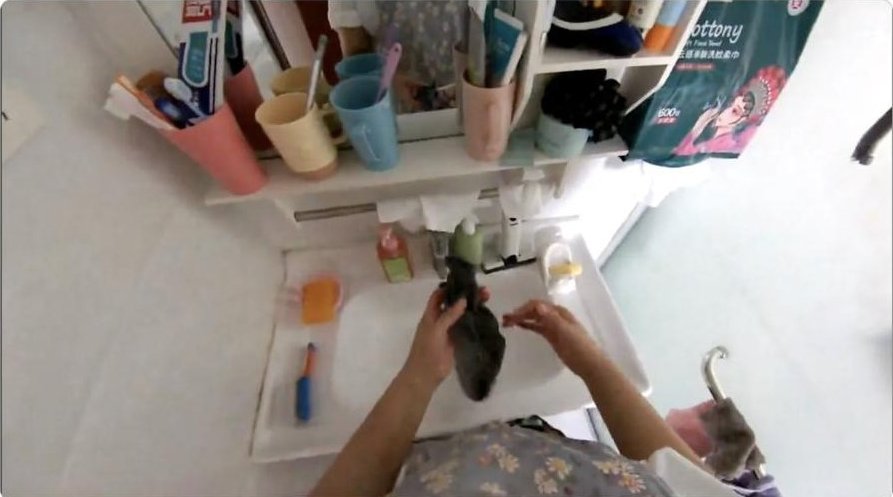
Bathroom routines produce very short actions with small objects, which is exactly where the rule set's half-second floor and padding rules earn their place. A great deal happens in under a second, and merging it away would lose the structure.
Mirrors add a specific annotation hazard. Every object and both hands appear twice in frame, and a description that names the reflection rather than the object is wrong in a way that is easy to miss on a fast review.
How the work runs
- Padded sub-half-second actions to the minimum clip length rather than discarding them.
- Merged very short repeated actions only where merging did not break one clip, one action.
- Named the physical object rather than its reflection in every description.
- Captured tap and control operation as distinct actions from the washing that followed.
- Recorded scene from the controlled vocabulary so basin and counter stay distinguishable.
- Applied the full four-pass review before delivery.
What makes it hard
- Mirrors duplicate both hands and every object in frame.
- Actions are often shorter than the half-second floor and need padding.
- Small tools are occluded by the hand holding them for most of the clip.
- Wet and reflective surfaces throw highlights across the operating hand.
- Confined spaces mean large head motion between adjacent actions.
- Sequences are highly repetitive, which makes reviewer attention the limiting factor.
Result
Short-action coverage of personal care routines with the half-second floor respected, reflections correctly excluded from object reference, and full review history retained.
What comes out
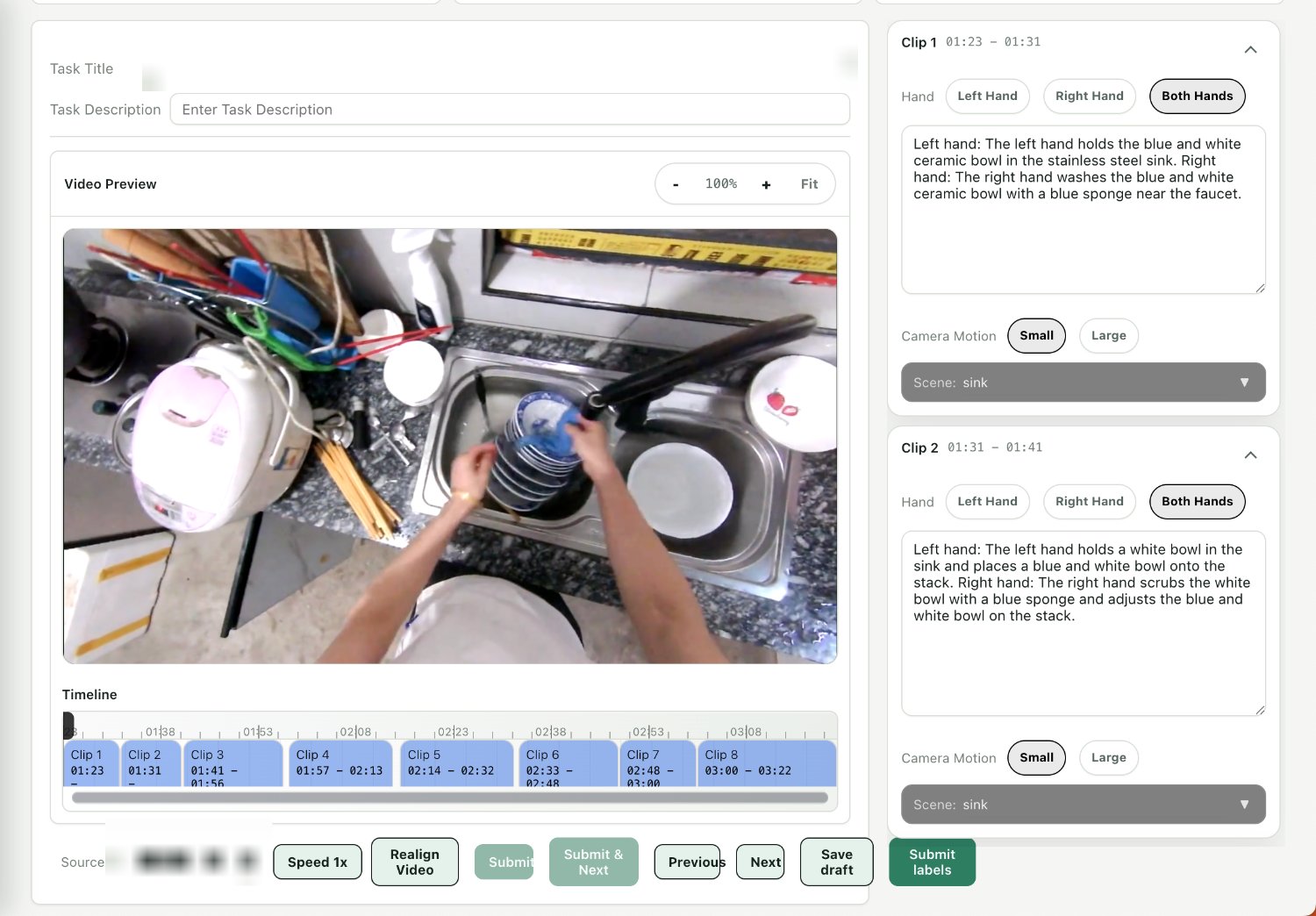
Structured records with padded short clips, per-hand descriptions naming physical objects, camera motion and scene attributes.